
Miscellaneous

Oregon’s Aging Workforce
Oregon’s workforce is aging. The number of Oregon jobs held by workers age 55 and over more than tripled from 1992 to 2016, while the total number of jobs grew by just 42 percent. Workers 55 years and over held just 10 percent of the jobs in 1992, increasing their share to 23 percent of all jobs by 2016. Driving this trend is the fact that much of the baby-boom generation is now 55 and over, and
Oregon’s Coffee Shops Continue to Perk Up
According to the National Coffee Association of the U.S.A., which has tracked coffee consumption through annual surveys since 1950, 83 percent of Americans 18 years and older say they drink coffee and 62 percent drink it daily. With such a large majority of Americans drinking coffee, it’s no surprise to find several coffee establishments in cities throughout the state, and sometimes multiple
February 14th Fun Facts!
Today we can celebrate Oregon’s birthday and Valentine’s Day. Here are some fun facts in honor of both occasions.
Make a Wish!
159
Oregon officially became a state on February 14, 1859. Happy 159th birthday!
11,600
The average number of births in the U.S. on February 14 between 1994 and 2014
52,456
The 1860 Census population estimate for Oregon
4,142,776
Oregon’s estimated population as of
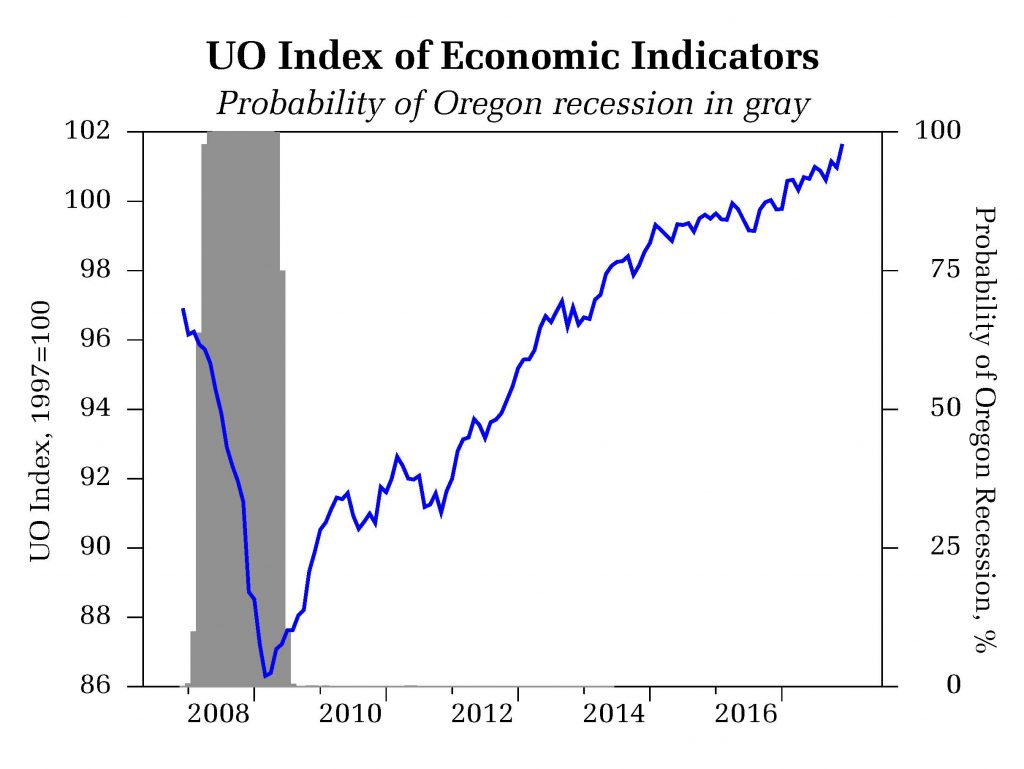
December 2017 Statewide Economic Indicators
This is the University of Oregon State of Oregon Economic Indicators for December 2017. The release date is February 6, 2018. Special thanks to our sponsor, KeyBank Link to full report here. The Oregon Measure of Economic Activity snapped higher… Continue Reading →
Oregon’s Company Headquarters: Strong Growth
While Oregon is home to just two Fortune 500 companies, that doesn’t mean headquarters don’t have an impact on our economy. Oregon’s 1,300 establishments in the ‘management of companies’ sector employ nearly 47,000 people and pay a whopping average wage of $114,500. And while it’s just 3 percent of Oregon’s private-sector employment, it generates 6.8 percent of the state’s private-sector payroll
Per Capita Personal Income in Oregon
In 2016, Oregon had a per capita personal income (PCPI) of $45,399. Oregon’s PCPI ranked 29th in the United States and was 92 percent of the national average, $49,246, according to the U.S. Bureau of Economic Analysis. In Oregon, the 2016 PCPI increased by 2.4 percent from 2015, faster than the nationwide PCPI growth rate of 1.6 percent.Per capita personal income also varies between states and

November 2017 Oregon Regional Economic Indicators
The University of Oregon Regional Economic Indexes for November 2017 was released today, January 24, 2018. We thank KeyBank for their generous support of this project. Click here for full report. The economic outlook remains bright for Oregon’s major metropolitan… Continue Reading →
December 2017 Employment and Unemployment in Oregon’s Counties
Benton County had Oregon’s lowest seasonally adjusted unemployment rate at 3.1 percent in December 2017. Other counties with some of the lowest unemployment rates in December include Hood River (3.2%) and Wheeler (3.3%).
Twelve of Oregon’s counties had unemployment rates at or below the statewide and national unemployment rate of 4.1 percent. Wheeler County saw its unemployment rate improve over
Oregon Adds 14,700 Jobs in December
In December, Oregon’s nonfarm payroll employment grew by 14,700 jobs, following a revised loss of
300 jobs in November. Monthly gains were concentrated in two industries that bounced back from
weaker hiring patterns in the summer, as leisure and hospitality added 4,400 jobs in December and
professional and business services added 3,000. Three other industries added at least 1,000 jobs in
December
2017 in Review: Job Growth Slows as Unemployment Reaches Record Low
Oregon’s job growth slowed in 2017 to its slowest rate in five years. The slowdown wasn’t caused by employers needing fewer workers. This slowdown seems to be the result of employers struggling to find enough workers to fill their vacancies, which is limiting the amount of job growth.
Oregon employers added a healthy 50,600 jobs in the 12 months through June, before slowing down later in the